During the COVID-19 pandemic, (2020-2022) I had the privilege of being invited by Laku Neg to join an online forum of selected artists from the African diaspora. The pandemic was a time of deep reflection for many, as the world entered a global lockdown unlike anything previously experienced.
The forum brought together around eighteen artists from diverse backgrounds and countries across the world. We connected online via Zoom from the comfort of our homes. I noticed that I was the only male participant, though the setting felt familiar and welcoming. This gathering united people of African descent and the diaspora, creating a space to share lived experiences, cultural influences, and artistic practices that were both inherent and collectively reflected in our work.
The core aim of the Laku Neg project was to unite artists of African descent under one umbrella, creating a unique collaborative experience that showcased the realities and expressions of Africans in the diaspora. This collaboration would culminate in an open-air public event built around these shared narratives.
My own background spans several disciplines. After studying architecture for four years, I transitioned into music, composing and performing my own work known as Afunja Music. I later moved into computing, IT, web design, and digital arts. Other artists contributed through poetry, dance, form, texture, fabric, and diverse cultural traditions.
Together, we ultimately developed an open-air event and masquerade procession that honoured African spirituality and collective culture—both within Africa and across its global diaspora.
The project would have also involved artists-in-residence at various stages, allowing us to collaboratively create and realise this collective artwork and public cultural experience.
After we collectively decided to draw on the traditions of African masquerading to express our shared spirituality and creative voices, the next crucial step was securing a grant to stage the procession.
We envisioned a masquerade procession rooted in crowd participation, environmental awareness, artistic collaboration, and communal dance and music. Although the grant ultimately fell through, the passion did not. While the pandemic took its toll, it also awakened a deep yearning to reconnect with the traces of universal culture within and across the African diaspora.
The pandemic further fostered a unique bond within this forum—one that briefly invited us into one another’s creative spaces, meeting in solitude yet in connection, free from the usual distractions of the busy world.
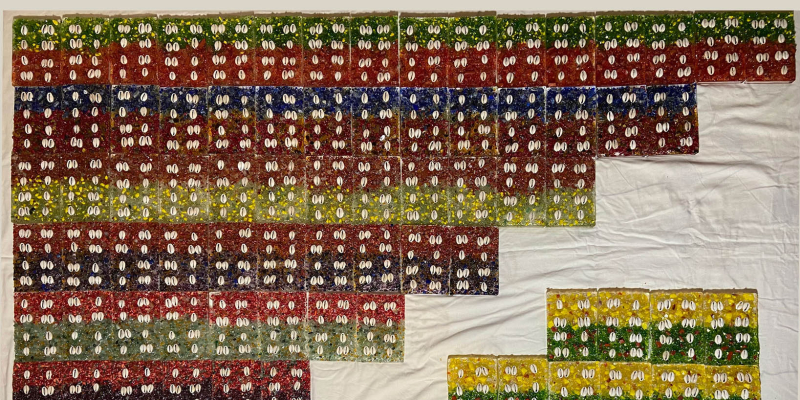
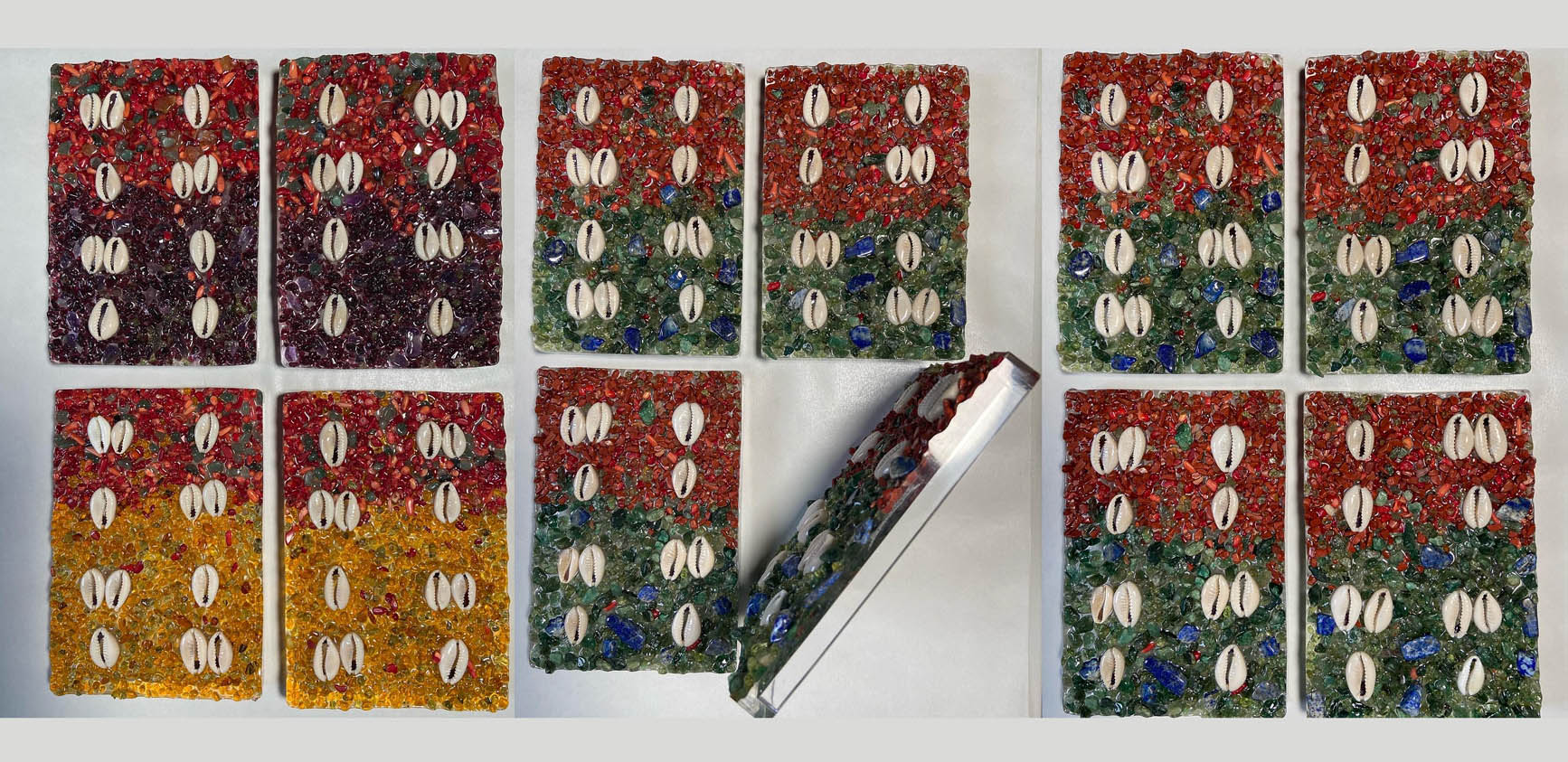
My contribution focused on music and the sharing of my Yoruba heritage, which involved creating something deeply symbolic: the sacred elements of the Yoruba Odu Ifa. I envisioned crafting all 256 symbols of the Odu Ifa using resin and cowrie shells, to lead the masquerade procession. The music was to be composed to encourage audience participation, with layered chants and choruses supported by percussive rhythms made from recycled tins.
The use of recycled materials was a deliberate choice, made to honour Mother Earth. Our discussions extended beyond preserving and cultivating culture to examining our relationship with nature itself. Once again, the pandemic played a significant role—serving as both a wake-up call and an invitation to explore the possibility of a creative, interconnected reality.
Although the grant funding fell through, the conversations led me to an important realization: there was very little accessible material on the Yoruba Odu Ifa divination system—certainly not enough to make a meaningful impact. At the same time, I noticed that Yoruba names were already deeply rooted throughout the diaspora, yet their meanings and spiritual connections were largely absent.
While Yoruba spirituality was never spread through door-to-door preaching, it continues to resonate through names. Each Yoruba name is, in essence, a complete sentence that preserves the mother tongue. Every time a Yoruba name is spoken, a sentence in Yoruba is unknowingly spoken as well.
This insight, born from the forum, became a journey of collaboration and creativity—of culture and connectivity, art and spirituality, recycling and rebirth, and our relationship with Mother Earth. It left me with a persistent desire to make the ’Odu Ifa’ divination system more accessible to a modern perspective, rather than leaving it frozen within a historical context.
The question became: how could it be made readily available? At this point, I began by creating the 256 individual resin plates I had originally envisioned for the masquerade procession. So far there are only thirty-two left to complete the set.
The resin tiles would have been displayed in a wooden frame arranged in sixteen rows and sixteen columns, reflecting the 16 × 16 structure that yields 256 tiles—representing all possible binary combinations within the system. Each tile would be labeled with the name of its corresponding Odu, resulting in a frame measuring approximately 3.5 metres in height and 2.5 metres in width.
Masquerades, music, rhythms created from recycled materials, audience participation, and a dance procession would have accompanied the display as it was carried into the masquerade’s entrance.
The resin tiles:
The ‘256 ODU IFA DIVINATION CARDS’ - Companion Book and Deck of Cards:
After the forum concluded and the decision was made not to fund the masquerade event, a lingering issue remained. It was not that African spiritual culture—particularly within the diaspora—had ceased to exist. Rather, it continued to be practiced not as a formal religion, but as a spirituality that had become obscured by negative dogma. For example, the Yoruba Odu Ifa divination system is highly structured and deeply sophisticated, yet information about it is not as readily accessible as it is for many other spiritual practices. Yoruba spirituality was not historically housed in grand temples or churches; instead, it lived within the names, identities, and life experiences of individuals.
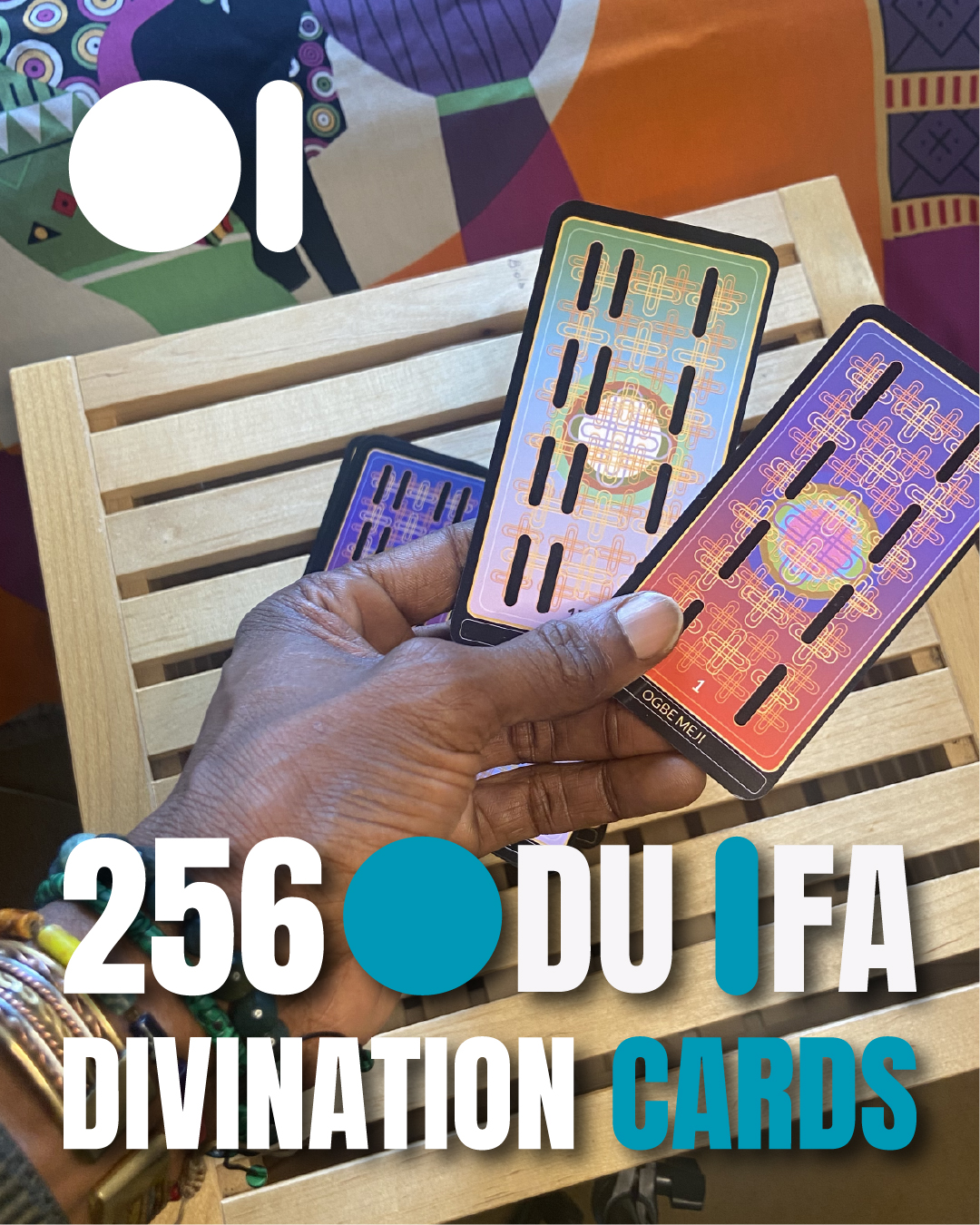
This realization inspired me to create the Odu Ifa divination cards accompanied by a companion book. The goal was to present the knowledge in a properly structured and indexed format, rather than relying solely on traditional oral transmission, which risks fading over time. The book and cards are now available on Amazon as a foundational introduction to the 256 Odu Ifa.
The concept and visual design for the divination cards came first; what was missing was the manuscript for the companion book. That absence was unexpectedly filled through the contributions of a childhood friend from primary school, Akanbi Omo Amoke, who had independently been assembling texts grounded in his upbringing within the Ifa tradition. Our collaboration unfolded effortlessly and intuitively, as though it had always been meant to happen.
I would like to thank Laku Neg for creating the opportunity to connect with like-minded individuals from diverse backgrounds across the African diaspora, spanning various art forms and creative cultures. I hope that, as the year progresses, more forums like this will emerge—spaces that foster creativity, share knowledge, and encourage the integration of new ideas within African culture and universal traditions.
Websites:
The ‘256 ODU IFA DIVINATION CARDS’ - Companion Book and Deck of Cards:
By Akanbi Omo Amoke and Afọlabi Lipẹdé